Wooden vs Plastic Sensory Toys: Which Is Better for Your Child? - Playbox India
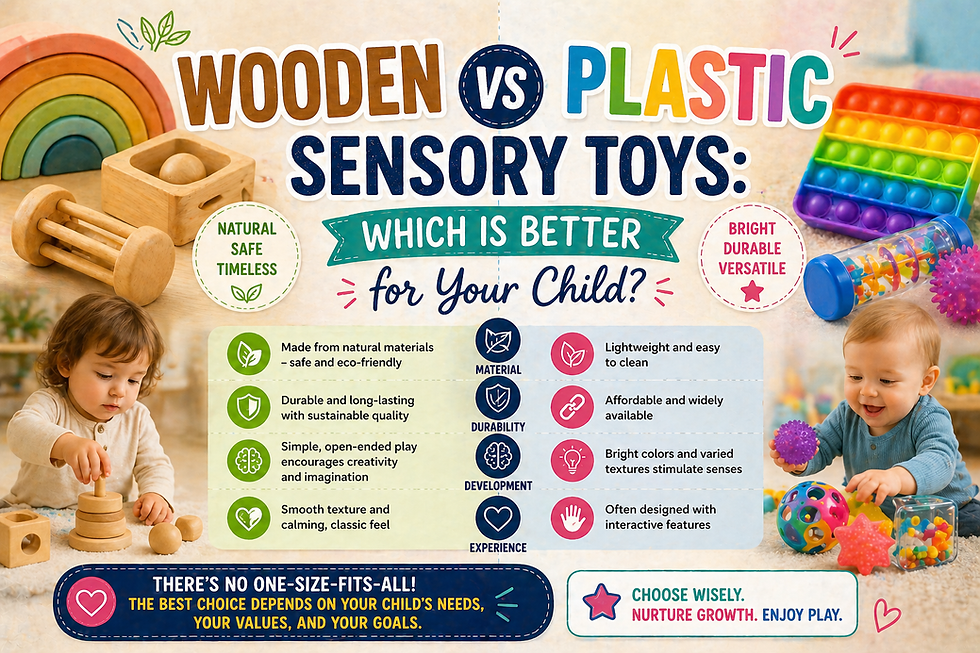
Choosing between wooden and plastic sensory toys is a common dilemma for parents. Both options offer unique benefits, but the right choice depends on your child’s developmental needs, safety and play style.
Sensory Experience and Development
Wooden toys are often praised for their rich sensory feedback. Their natural texture, weight, and warmth provide a more engaging tactile experience, helping children better understand touch, balance and coordination.
Plastic toys, on the other hand are usually smooth and lightweight. While they may include lights, sounds and movement, they often provide less varied sensory input, which can limit deeper tactile exploration.
Creativity and Play Value
Wooden toys typically encourage open-ended play, meaning kids can use them in multiple ways. Blocks, stackers and puzzles allow children to imagine, build and problem-solve freely.
Plastic toys are often more structured, with predefined functions like buttons or sounds. While entertaining, they can sometimes guide play too much, reducing creativity over time.
Safety and Durability
When it comes to safety, wooden toys are generally considered a better option. They are often made from natural materials and are less likely to contain harmful chemicals found in some plastics.
Durability is another strong advantage. Wooden toys tend to last longer and withstand rough play, while plastic toys can crack or break more easily.
Practicality and Variety
Plastic toys do have their place. They are usually more affordable, lightweight, and available in a wider variety of designs, especially for interactive or themed toys. They’re also ideal for specific uses like water play or travel, where durability and portability matter more than sensory depth.
Conclusion
For sensory development, wooden toys often come out ahead due to their tactile richness, durability, and ability to promote creativity. However, plastic toys can still be useful for interactive learning and convenience.
The best approach isn’t choosing one over the other, it’s finding a balanced mix. Combine wooden toys for imaginative, sensory-rich play with high-quality plastic toys for variety and engagement. This way, your child benefits from the strengths of both worlds.


Comments